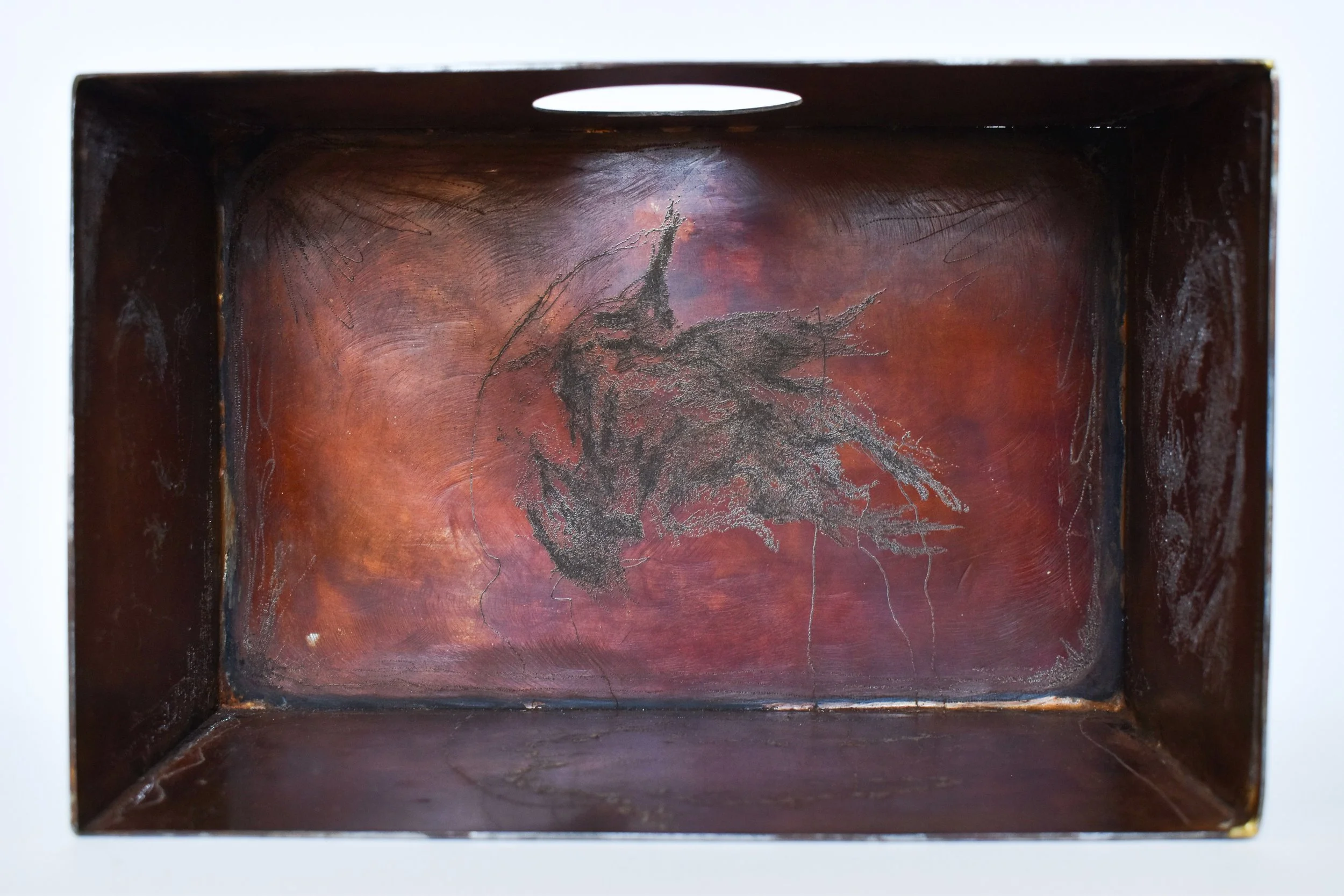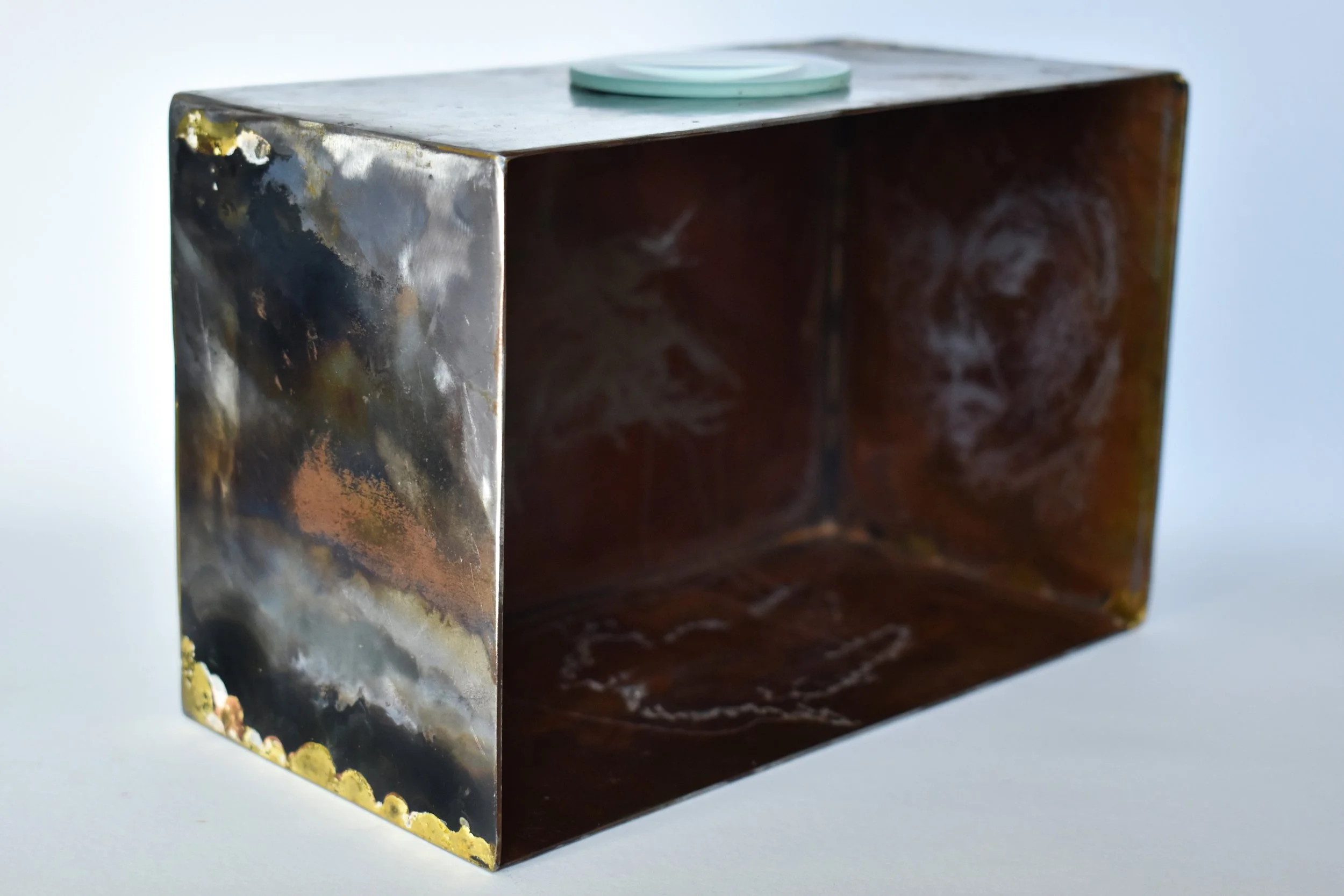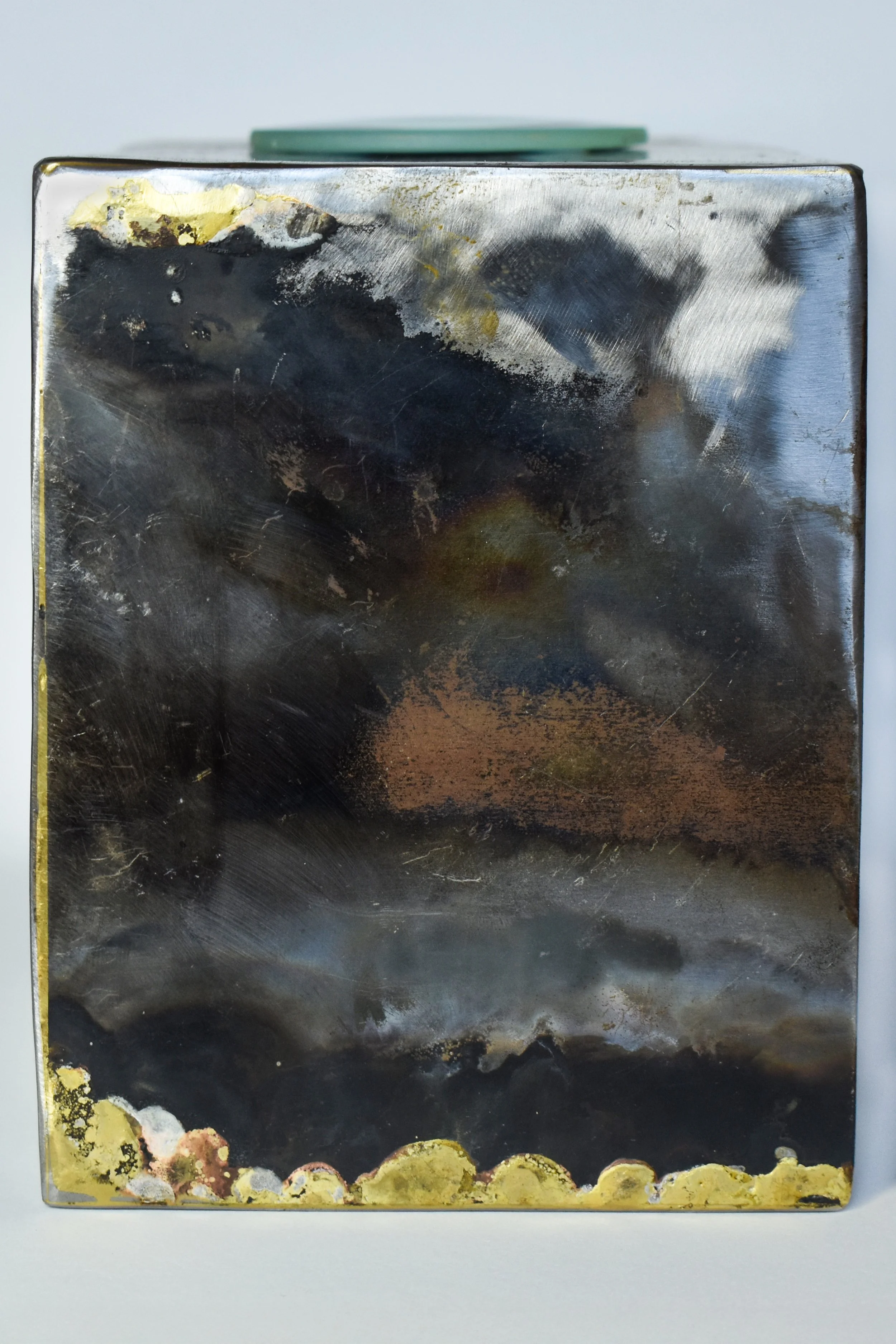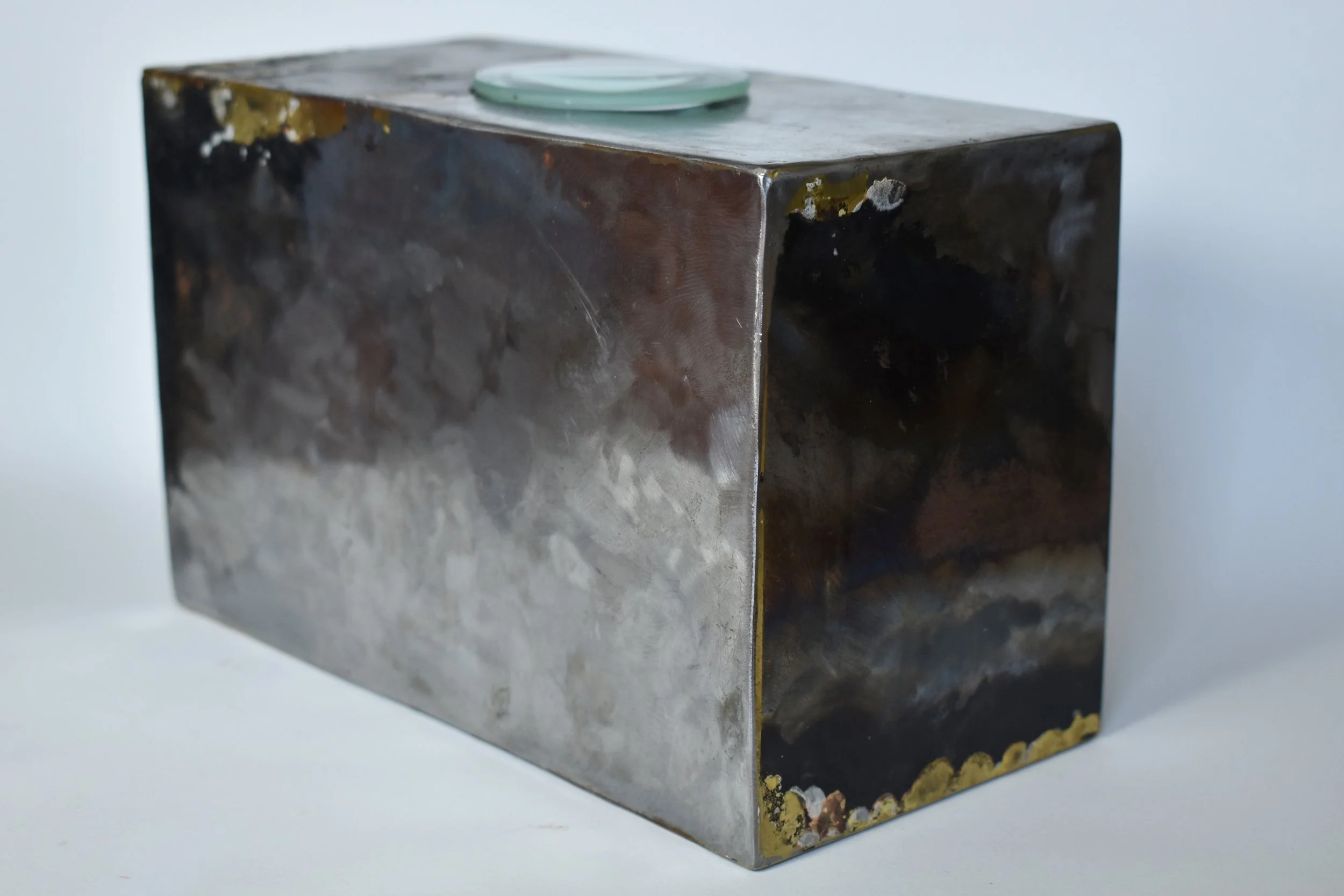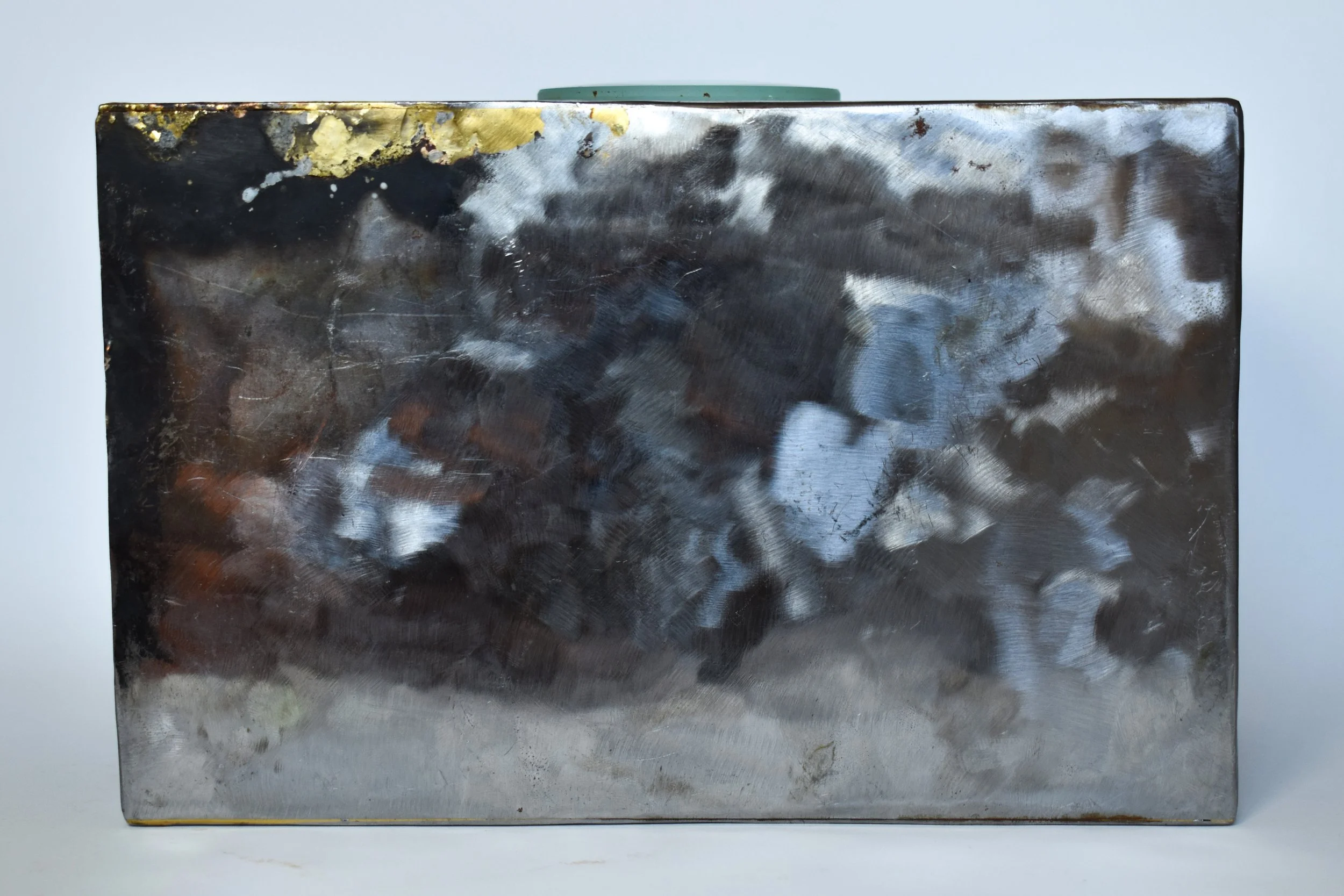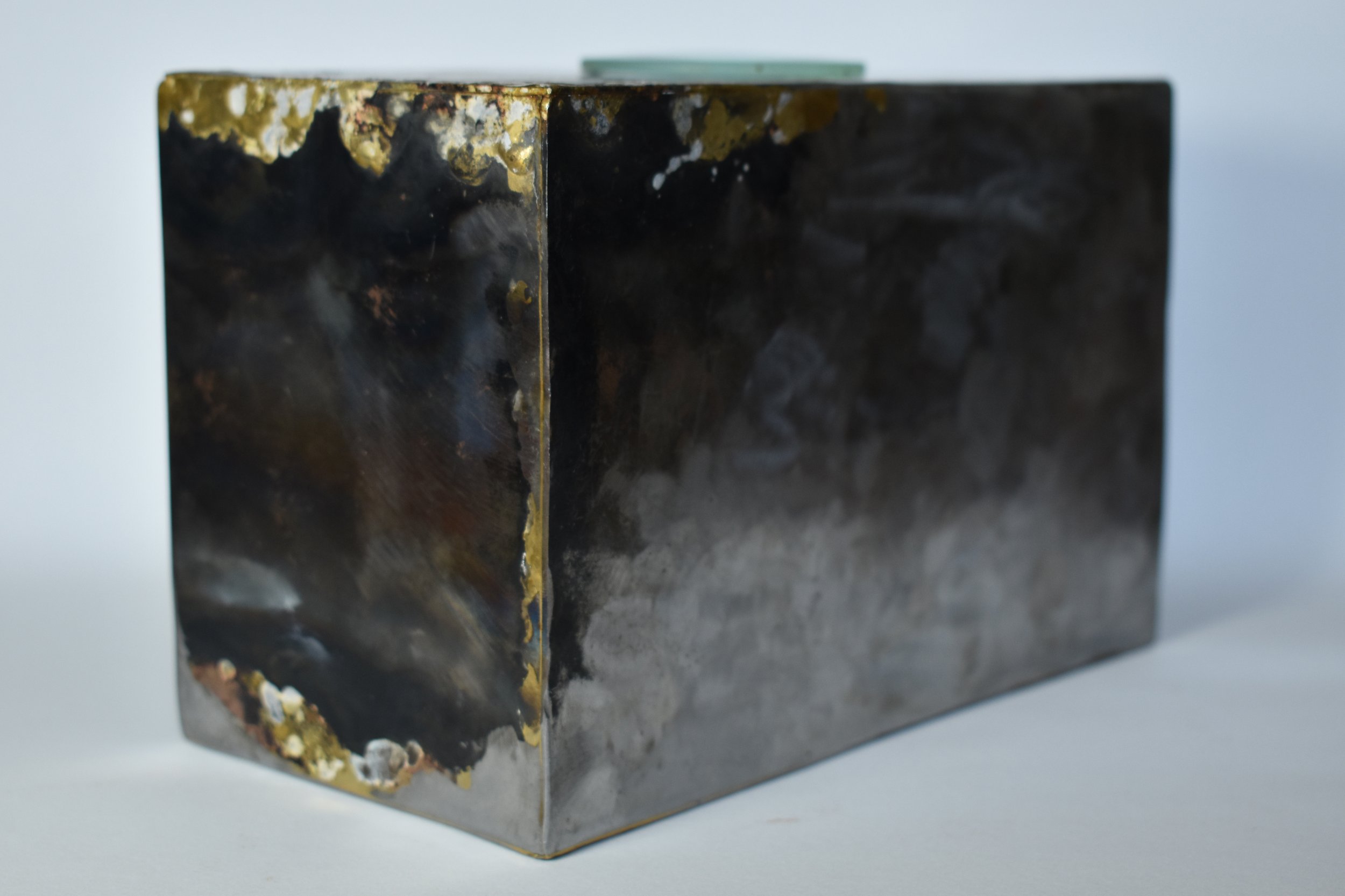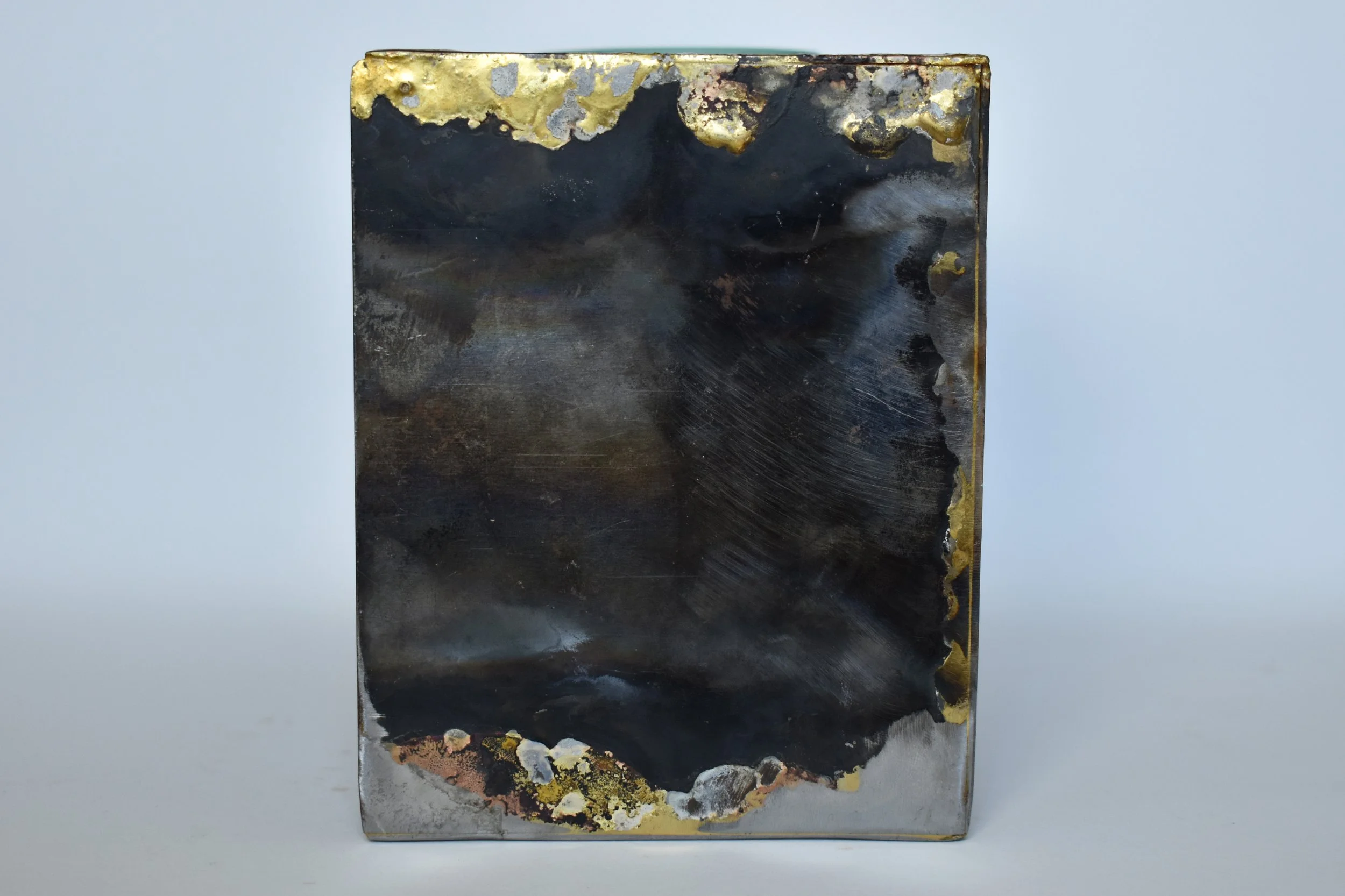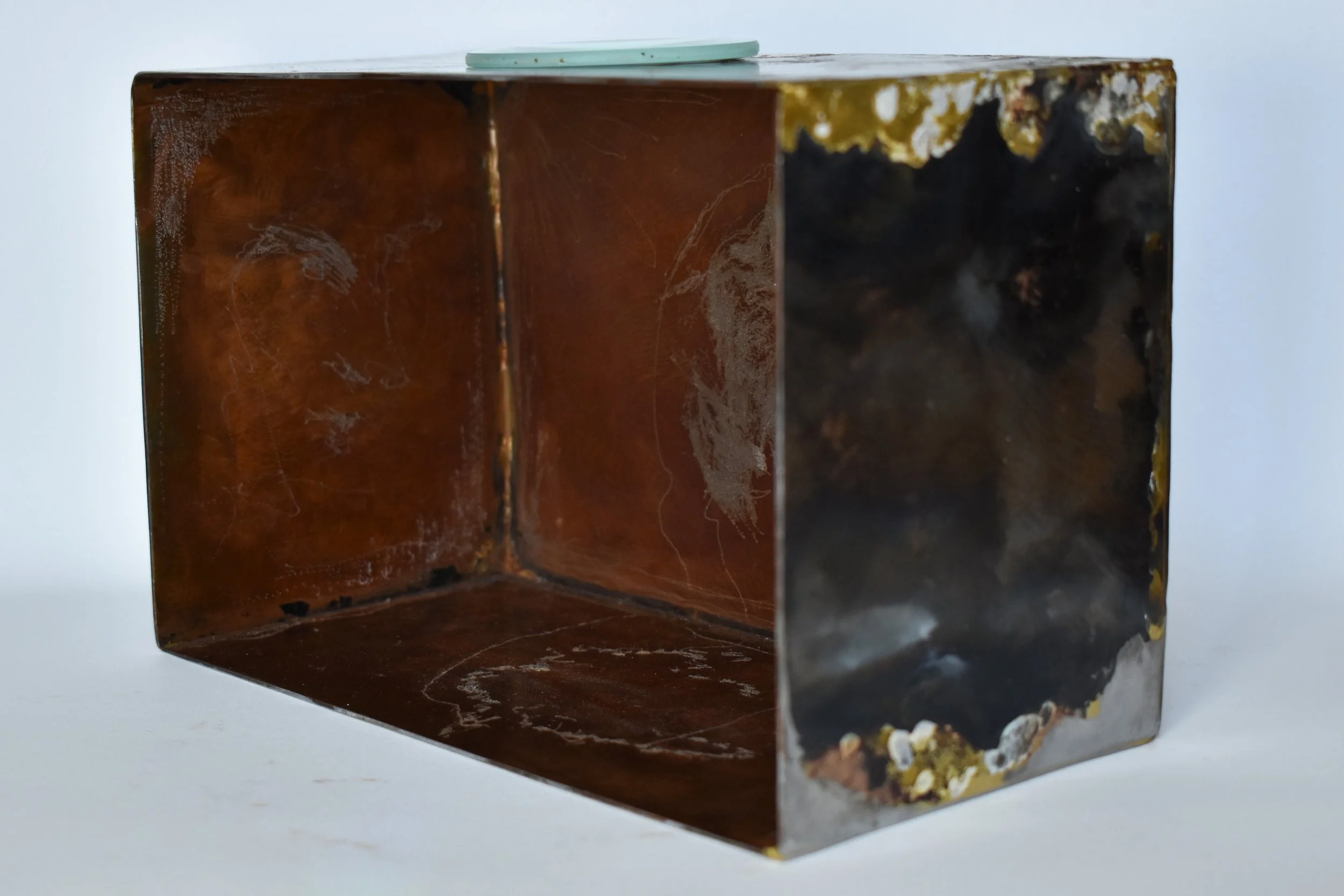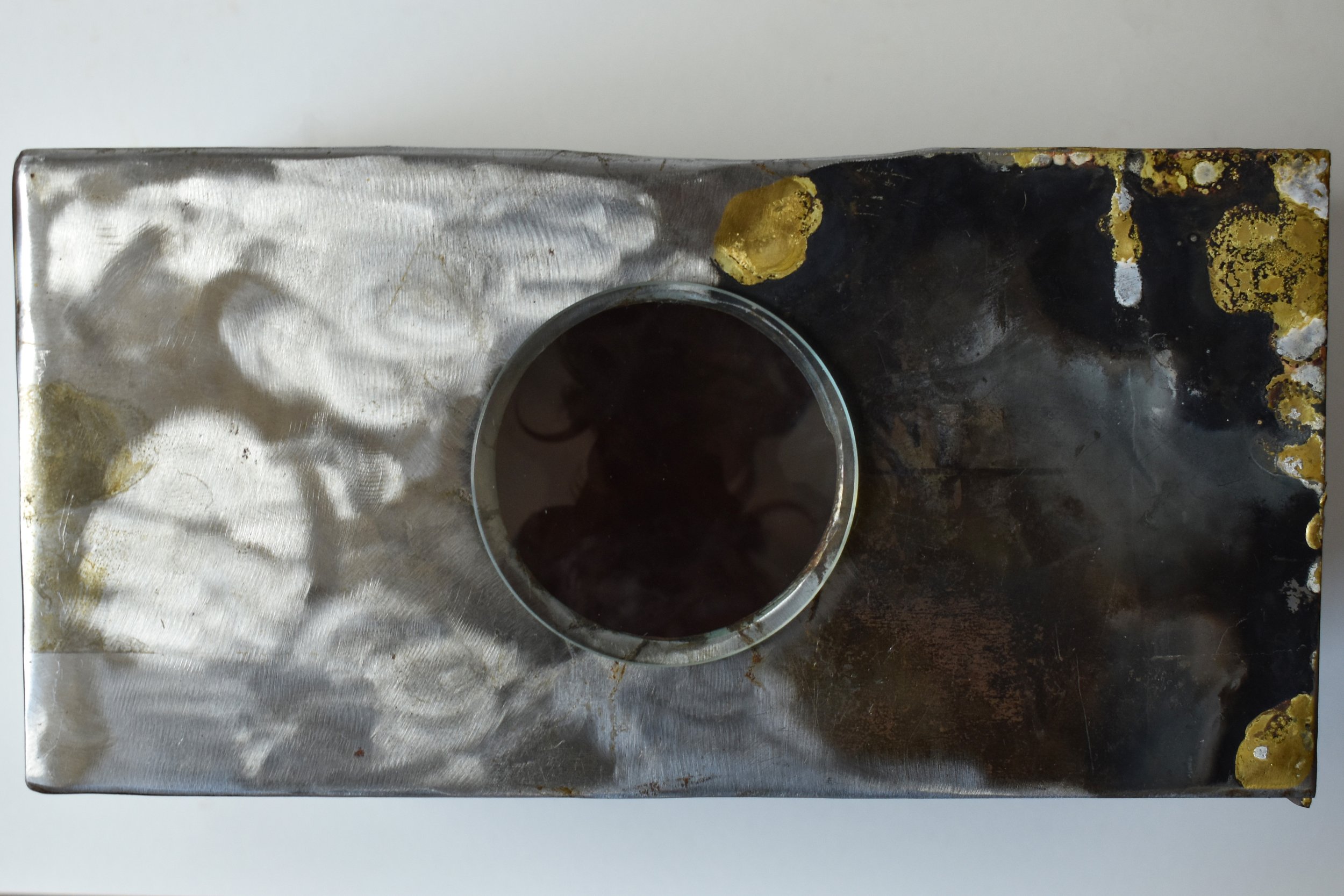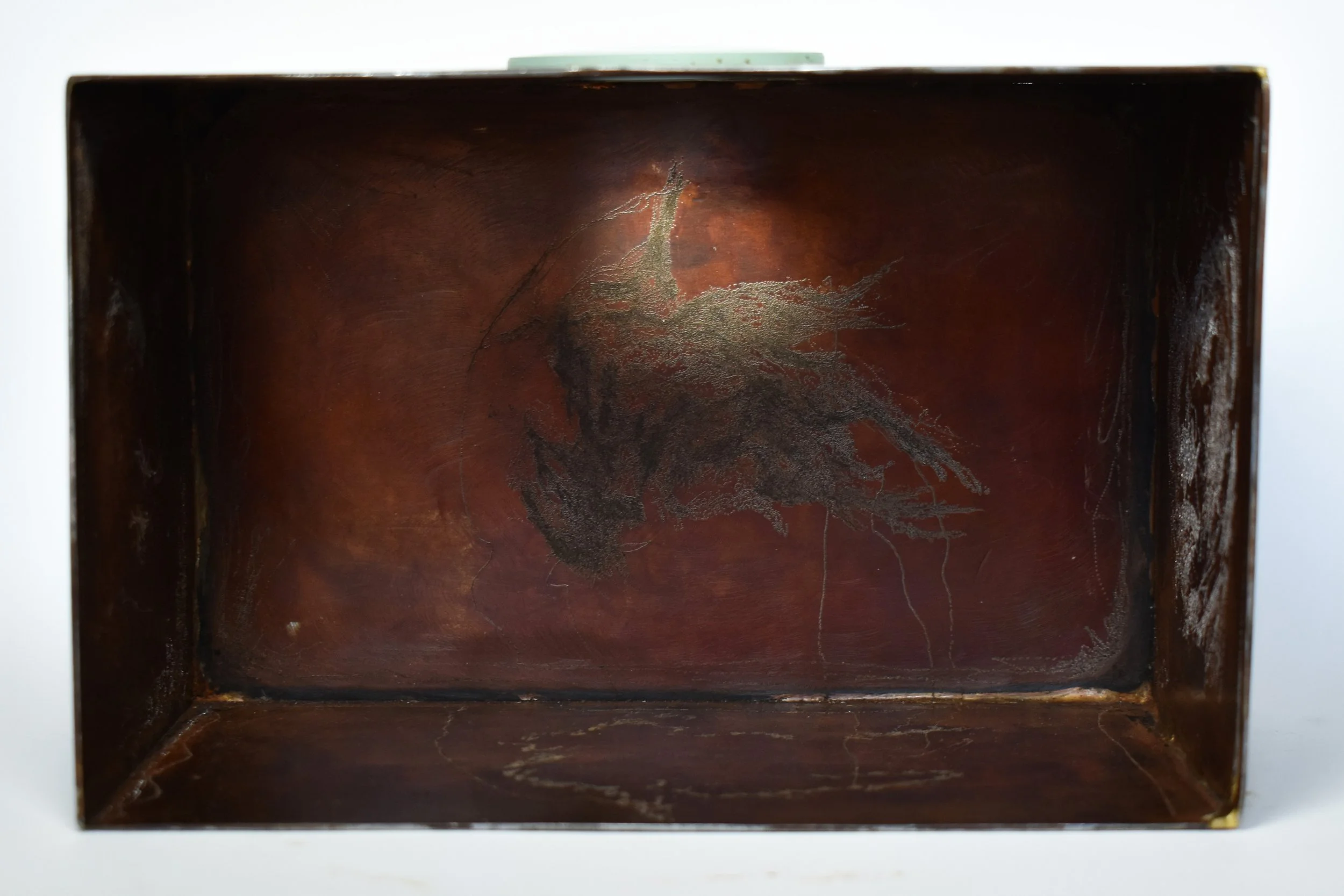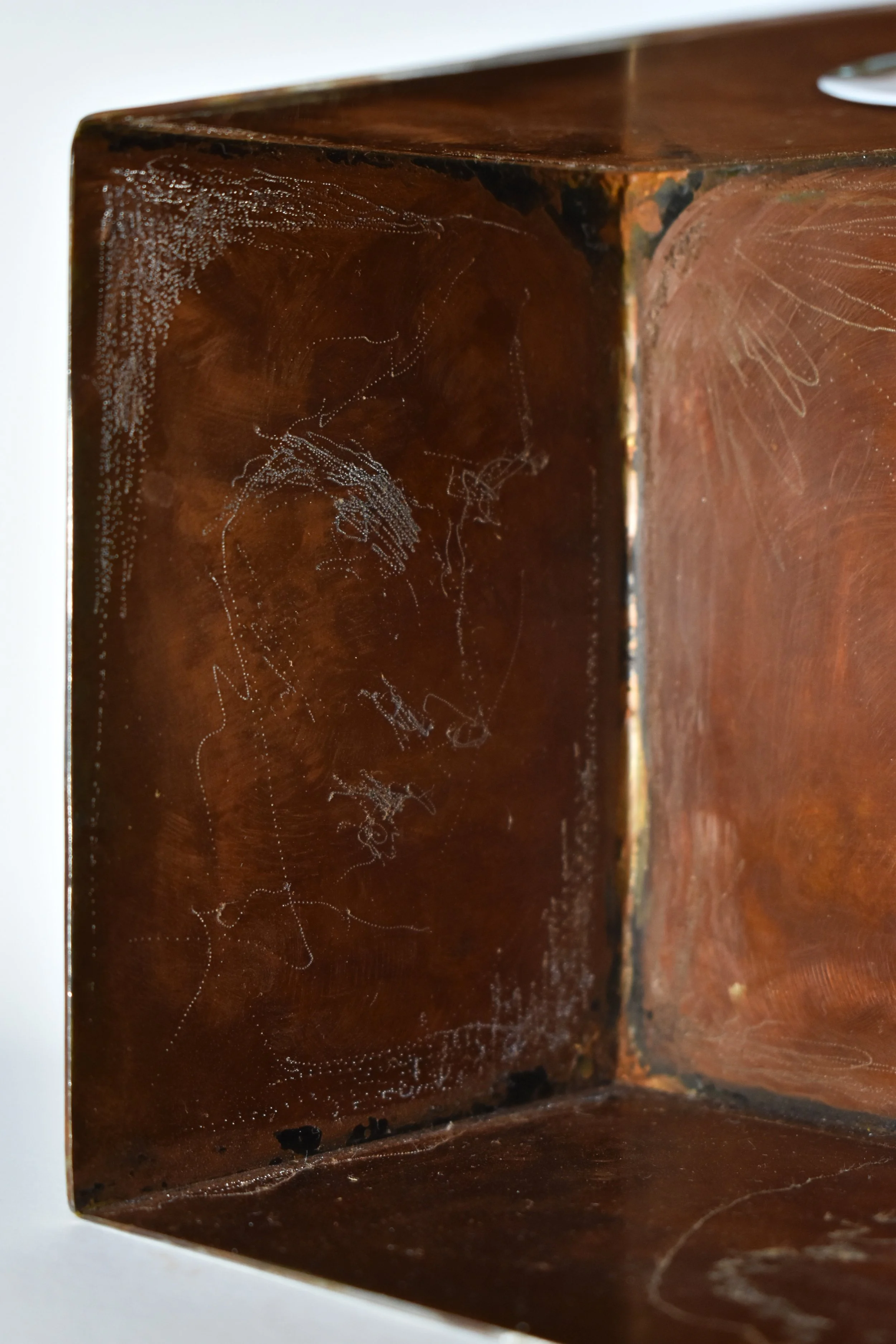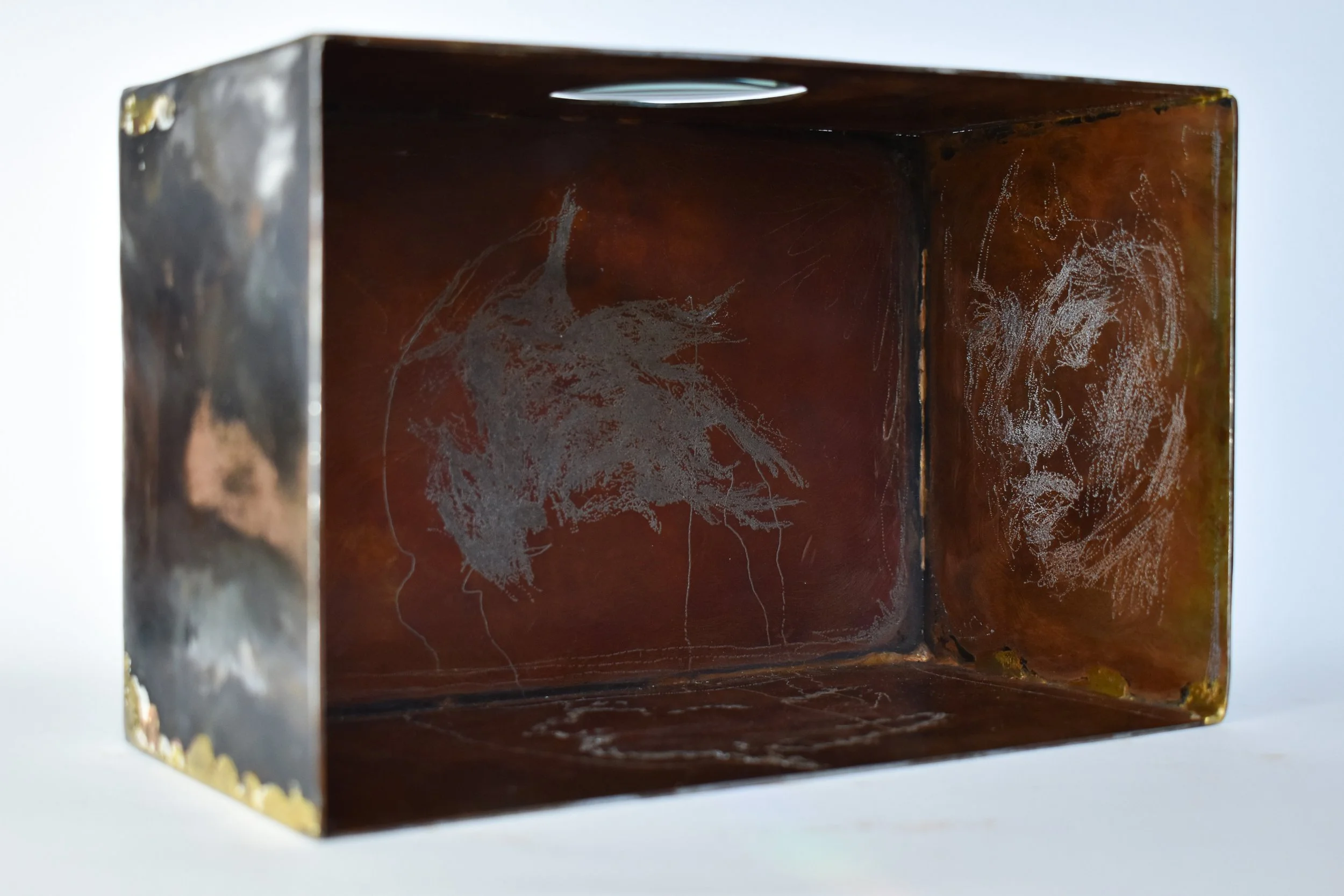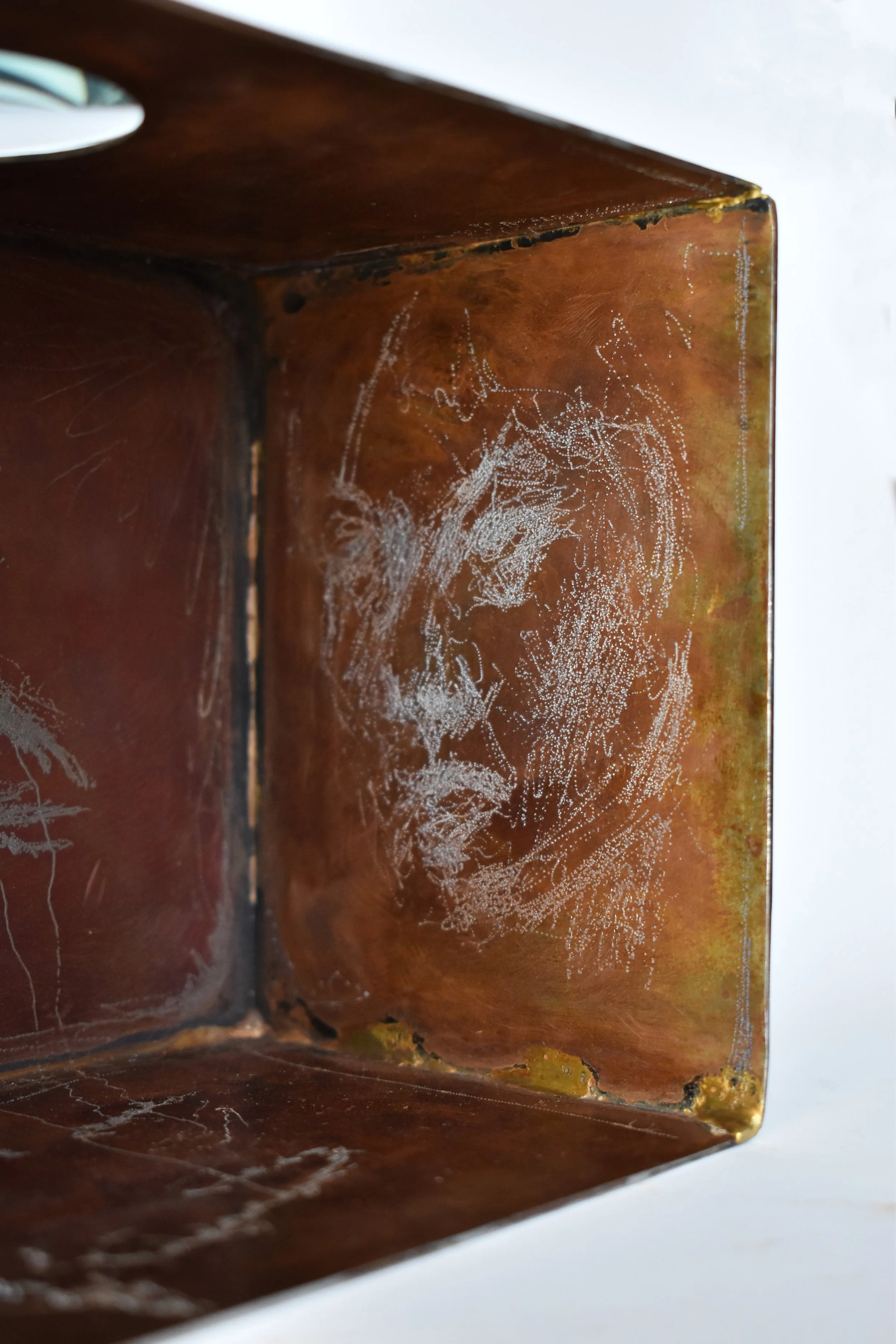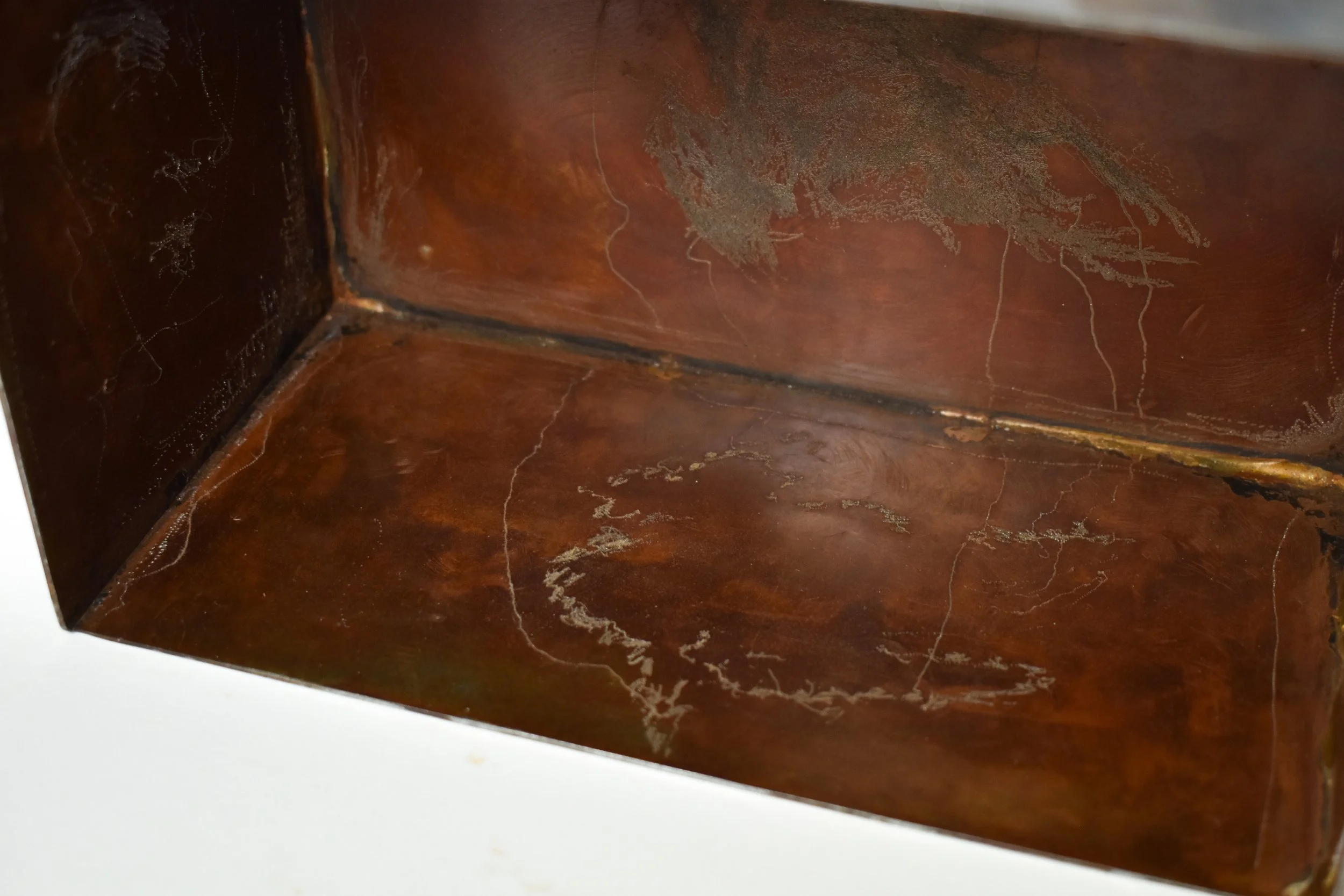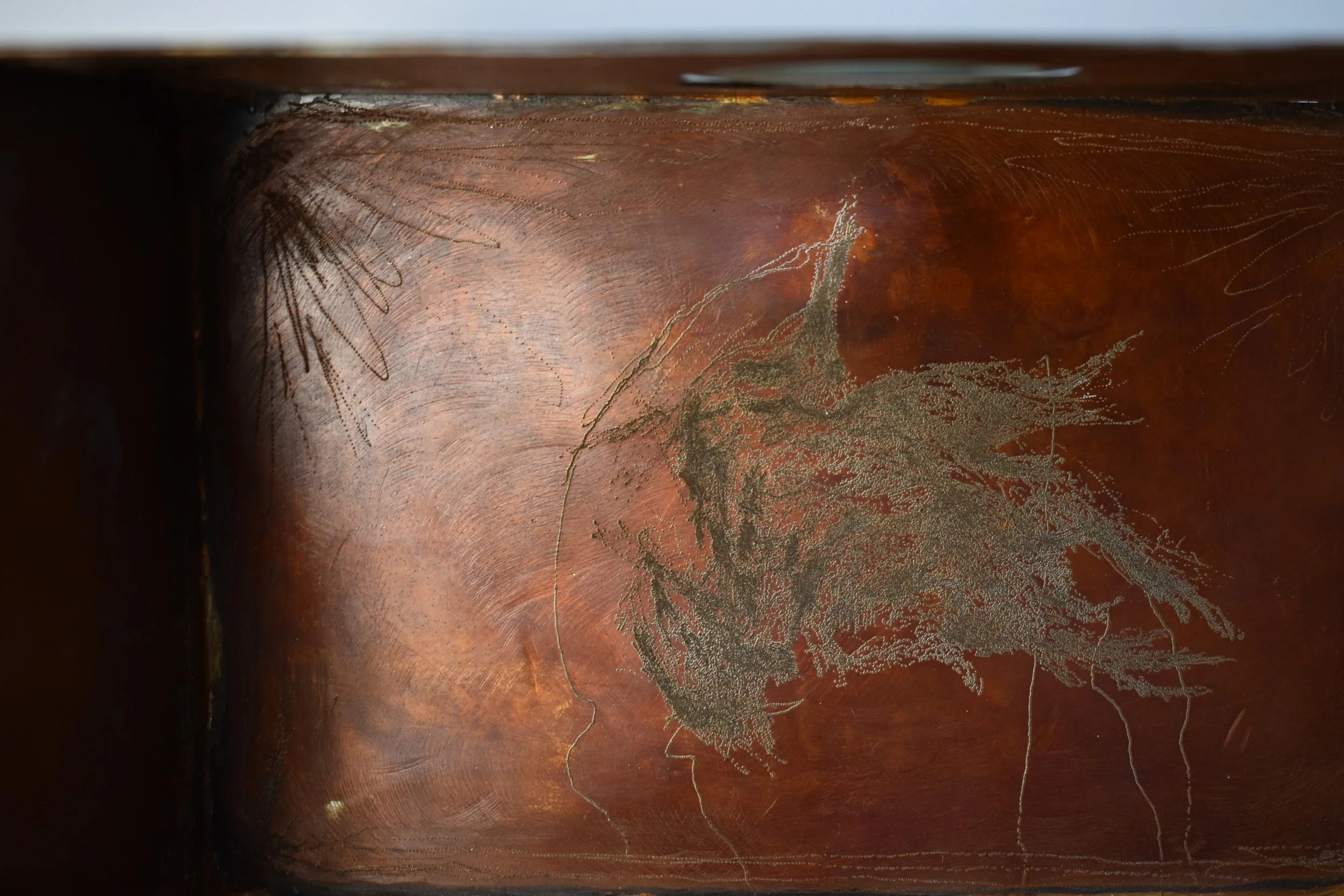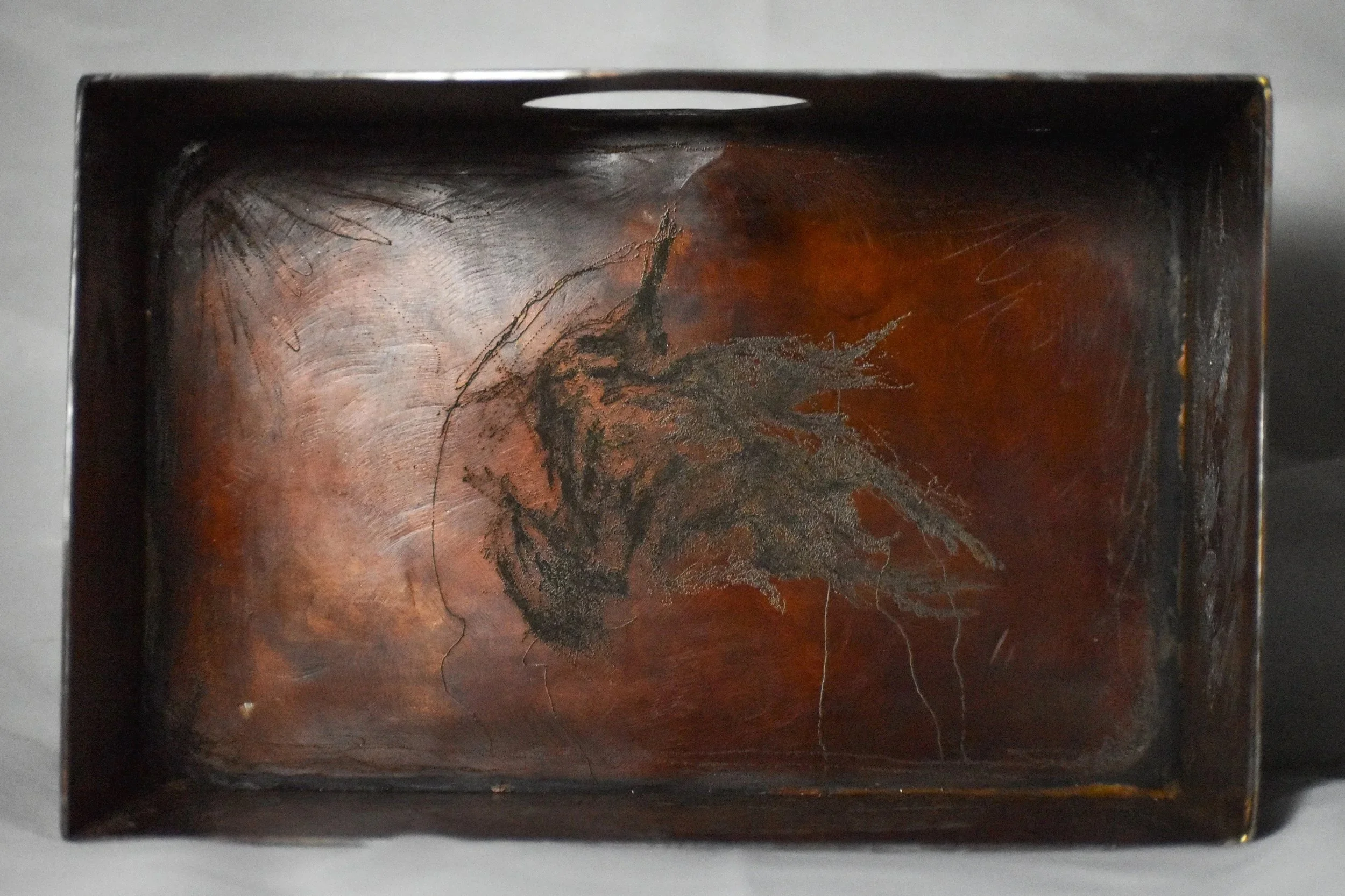
Something sweet and small to hold, 2026, steel, patina, brass brazing, magnifying glass
I remember the bird on the beach: She caught my eye as a graceful figure, her downy summer feathers bathed in damp sand. The sand almost created a shell around the deceased creature, though the wind would always blow, knocking a few grains down and disturbing her newfound dormancy. I shielded her from the wind with a piece of driftwood. I stepped around the jellyfish and urchins, filtering empty mussel shells and seaweed into my shallow pockets. I ensured our endurance of an extended silence, a methodical sighing and crying through my fingertips gesturally outlining her body in shells, and punctuating her wings, spread limply in grace, with soft ties of seaweed.
Someone kicked the dead bird over the piece of driftwood with which I had sheltered her. Her beautiful restful self was still sprawled across the sand, but now the barricade divided her from the marks of my motions as her soggy, sandy feathers danced once again in the wind. Now that the shell outline I had formed around her was void of its substance, it stood as nothing more than a loose chalky mirror whose origin could not be ensured as natural or humanly hypocritical. I mourned our refusal to feel, and I scoffed at my own stubbornness.
This box is about how we treat something when we are aware of its temporality, how loss or expected loss for a number of reasons, ever changing, prompt us to lose inhibition and emotion is gathered and concentrated into a sharp and striking point. When perpendicular to the sun, by cycle or manipulation, the magnifying glass that sits atop the box gathers the light and brings it to a similarly fine, highly concentrated point that will tangibly transform (heat up) the metal. Of course, this warmth won’t be seen unless obstructed by something softer, placed to burn. Only the light will be visible, and the warmth will disappear soon after the light is dispersed.